The head of the International Monetary Fund (IMF) has warned the Iran war will cause permanent scarring on the global economy even if the fragile two-week ceasefire holds.
In a keynote address yesterday, Kristalina Georgieva said the conflict has reversed the global economy’s recent surge, which was driven by the AI boom and tech investment.
“In fact, had it not been for this shock, we would have been upgrading global growth,” she told attendees in Washington.
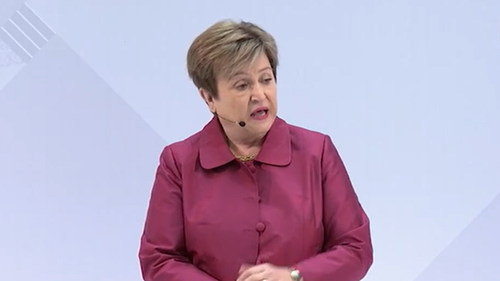
“But now, even our most hopeful scenario involves a growth downgrade. Why? Because of significant infrastructure damage, supply disruptions, losses of confidence, and other scarring effects.
“Even in the best case, there will be no neat and clean return to the status quo ante.”
Georgieva noted there are still unknowns about the war, but said what is certain is that growth will be slower and persist “even if the new peace is durable”.
The IMF in October had forecast global growth of 3.1 per cent this year, down by 0.1 per cent from the previous year.
That figure is expected to be much lower as each scenario the IMF has configured for its annual World Economic Outlook report, which will be published next week, shows a permanent impact on living standards.
Georgieva said she expects demand for IMF financial support to rise by up to $US50 billion ($AUD70.6 billion).
The US-Israeli war in Iran has cut the daily flow of oil and liquid natural gas by about 13 and 20 per cent respectively, according to Georgieva.
This has led to increased prices at bowsers and fuel shortages across Australia, as the nation gets most of its oil and gas from Asian refineries, which primarily get their oil and gas from the Middle East.
While the US, Israel and Iran have agreed to a two-week ceasefire to reopen the Strait of Hormuz and restart the flow of oil, the agreement is shaky.
There have been disagreements on elements of the agreements and all sides are poised to resume fighting.
US President Donald Trump said the “Shootin’ Starts, bigger, and better, and stronger than anyone has ever seen before” if a real agreement is not reached with Iran, adding that military assets will remain in the area until that happens.
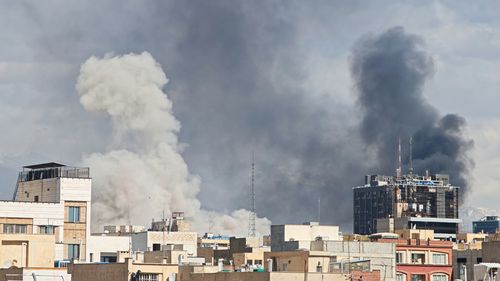
Israeli Prime Minister Benjamin Netanyahu warned his “finger remains on the trigger” and that “this is not the end of the campaign”, while Iran is accused by its neighbours of failing to open the Strait of Hormuz.
The global economic shock of the conflict has been widely compared to the 1970s energy crisis and the 2007 global financial crisis.
Georgieva said those two events showed how a new normal will be formed once the disruptions ease.
“Supply recovers and demand adjusts, new capacity comes on stream, energy efficiency rises,” she said.